
From first sketch to final polish, a single piece passes through many hands. A look at the process behind more than 35 years of craftsmanship.
A finished piece of jewellery gives very little away about how it was made. It arrives complete, and the weeks of work behind it are invisible by design. Here is what actually happens between an idea and the box.
It begins with a conversation
Before anything is drawn, we listen. What the piece is for, who will wear it, how it will be worn day to day. Someone who works with their hands needs a lower profile setting than someone who doesn't. These details shape the design far more than any stylistic preference.
Drawing and modelling
From that conversation come sketches, and from the sketch a precise model. This is where proportion is resolved — the height of the setting, the taper of the band, how the stone sits relative to the finger. Small adjustments at this stage make the difference between a piece that looks correct and one that looks considered.
Selecting the stones
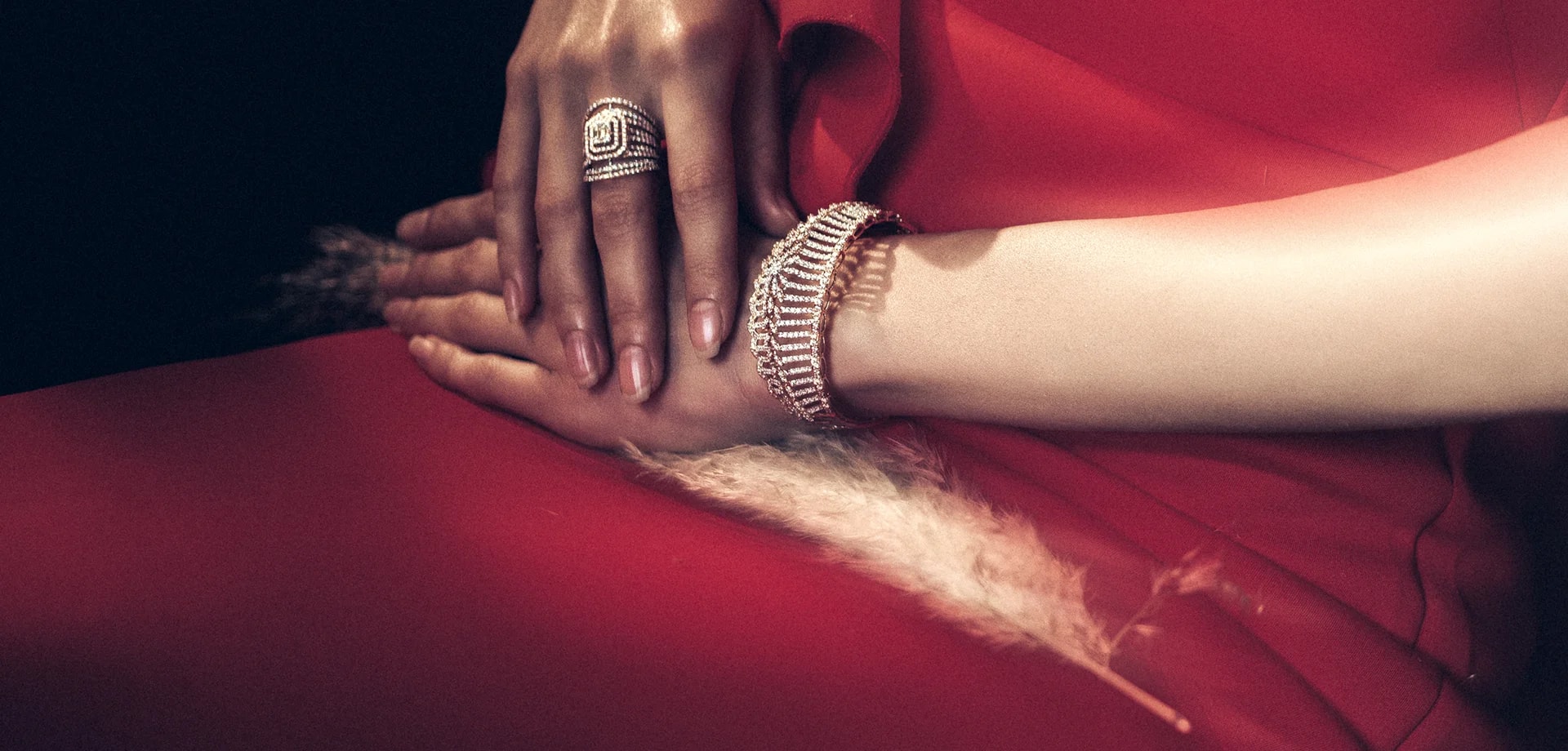
Stones are chosen for the specific piece rather than pulled from stock at random. Where several diamonds sit together, they must be matched for colour and cut so the eye reads them as one continuous line of light. A mismatched stone in a row is immediately obvious, even to someone who couldn't say why.
Setting
This is the most demanding stage, and the one that most rewards experience. Metal is worked around each stone by hand until it is held securely without obscuring it. Too little metal and the stone is at risk; too much and the light is smothered. A skilled setter finds the line between the two, repeatedly, on stones smaller than a grain of rice.
Finishing
Polishing is done in stages, each finer than the last, until the surface carries no visible tool marks at all. It is slow, largely invisible work — you notice it only in its absence.
Then it is checked again
Every piece is inspected before it leaves: each stone tested, every join examined, the whole thing cleaned. More than 35 years of doing this has taught us that the difference between good and excellent is almost always found at this last step, in the things nobody would have noticed for another five years.
Have a question about your next piece? We're always happy to talk it through.
Get in Touch